
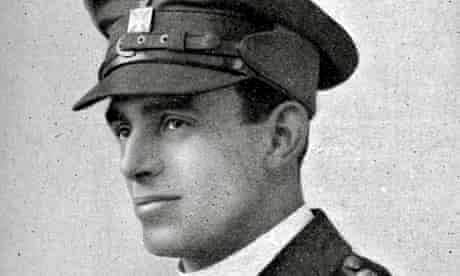
Geoffrey Anketell Studdert Kennedy was son of an Irish Anglican clergyman who lived in an age of Victorian middle-class prosperity, and British global power and influence. Born in his father’s vicarage in Leeds, he grew up in a city noted in 1904 for its poverty.[1] But, ‘here was born his profound affection for the poor… he was always to feel genuinely at home amongst them.’[2] Educated at the independent Leeds Grammar School, but also as an external student of his father’s alma mater, he went on to gain at Trinity College, Dublin, a first-class degree in classics and divinity. Then, having taught at Calday Grange Grammar School in the Wirral (1905-07), he began training for the Anglican priesthood at Ripon Clergy College.
Ordained Deacon in 1908, he was to serve his curacy first in Rugby, at that time in the Diocese of Worcester. Having been ordained Priest in 1910, he felt called in 1912 to return to Leeds to support his elderly father, and to be remembered for his ‘ever-deepening sympathy with the under-dog.’[3] Following his father’s death at 88 when still in harness, in 1914 Kennedy accepted the living of the ‘high’ church parish of S. Paul’s, Worcester, where he is reported to have explained to his wife, Emily: ‘S. Paul’s has the smallest income and the poorest people.’[4] This certainly summarized his lifelong attitude to money and his commitment to the poor. But after less than three months in the parish, the First World War broke out and the vicar, who had no sympathy with conscientious objectors, wrote: ‘I believe every able-bodied man ought to volunteer for service anywhere.’ On Christmas morning (1915) the newly appointed Chaplain to the Forces found himself in a French village leading worship for four hundred men and singing, ‘O come all ye faithful’. To use his own words, ‘Then came the glorious part came – I went to a shed in the farmyard, and the communicants came to me…. Christ was born in a cattle-shed.’[5] At that moment no-one could doubt Kennedy’s national pride on the one hand or, on the other, his commitment to the cause of conquering evil by good. ‘I knows now why I’m fightin’. It’s to put an end to war.’[6]
From a personal point of view, significantly with Emily in view, he addressed his own wholehearted response to the call to national service:
And it may be, with this breath
There will come the call of death,
And will put another world ‘twixt you and me.
You will stand with God above,
I will stand ‘twixt Pride and Love,
Looking out through mists of sorrow o’er the sea.[7]
Thereafter he exercised his spiritual ministry both on the front-line in France, and also in local barracks back home. He clearly distinguished these two sorts of battlefield, one physical with the German military, the other spiritual with British soldiers and their Devilish temptations to immorality. Linda Parker remarked that a ‘client for Rouen’ was then slang for venereal disease. ‘In fact a brothel had been established in Rouen and was visited by 171,000 men in its first year, with just 243 infection cases, but public opinion in the UK forced its closure.’[8] Kennedy commented: ‘Lord, how angry it makes me this attack on men in the rear.’[9] Moreover at a time when chaplains were often dismissively regarded as little more than backstage welfare officers, he saw his first role, as an optimistic morale-booster. Although that was to change. In the huge army base at Rouen, on joining the train leaving for the front-line he used to distribute Woodbine cigarettes from one of his two haversacks, and New Testaments from the other. He was never to lose the reputation which he established then in France. He was always to be regarded affectionately as ‘Woodbine Willie’. Kennedy’s close involvement with trench life was restricted to three short and distinct periods in France. First, in June 1916 he was posted as padre in the Somme offensive. The second direct involvement was in 1917 at Ypres, and in the attack on the Messines Ridge.[10] The third exposure came in 1918 at the final Advance at the Meuse-Argonne. In between these life-changing experiences, he was recruited for the Church of England’s National Mission of Repentance and Hope (1916) which aimed to bring spiritual renewal at home, and overseas on the battle front. However, in one of his Rough Rhymes of a Padre (1918), Kennedy expressed his own hesitant but growing unease with the contemporary and conventional evangelical religious and nationalist views of life:
Our Padre, ‘E says I’m a sinner,
And John Bull says I’m a saint,
And they’re both of ‘em bound to be liars,
For neither of them, I ain’t.
I’m a man and a man’s a mixture,
Right down from ‘is very birth,
For part ov ‘im comes from ‘eaven
And part ov ‘im comes from earth….
Old England same as us Englishmen,
A mixture o’ bad and best, parsons mean
Wi’ their Mission o’ Pentance and ‘Ope,
They want us to wash old England’s face clean,
Wi’ the grace of Gawd for soap.
And it ain’t a bad stunt neither,
For England she oughter be clean,
For the sake of the boys what ‘ave fought and died
And their kiddies as might ‘a’ been.
We can’t let it be for nothin’
That our pals ‘ave fought and bled,
So, lads, let’s look to this washin’ up
For the sake o’ Christ — and our dead.[11]
After the war, his world view was to change with his employment as an evangelist for the so-called ‘social gospel’. This was occasioned by his deeper wartime understanding of God’s ongoing suffering for the world.
Father, if He, the Christ, be Thy Revealer,
Truly the First Begotten of the Lord,
Then must Thou be a suff’rer and a Healer,
Pierced to the heart by the sorrow of the sword.
Then must it mean, not only that Thy sorrow
Smote Thee that once upon the lonely tree,
But that today, tonight, and on the morrow,
Still it will come, O Gallant God, to Thee.[12]
Like S. Paul he perceived it in the ongoing sufferings of Christ for the Church, which S. Paul had experienced and expected to continue experiencing, along with his fellow-travelling disciples in the early Church. Kennedy’s view was that:
‘If the Christian religion means anything, it means that God is suffering love, and that all real progress is caused by the working of Suffering Love in the world…. The Cross is not past but present. Ever and always I can see set above this world of ours a huge and towering Cross, with great arms stretched out east and west from the rising to the setting sun, and on that Cross my God still hangs and calls on all brave men to come out and fight with evil, and by their sufferings endured with Him help to lift the world from darkness into light.’[13]
On this point, some critics accused Kennedy of heresy for his belief in the ongoing suffering God, but there is no doubt that in the New Testament S. Paul experienced and expected this within his own ministry. He wanted to share God’s suffering in his total commitment to the person of Jesus; ‘I want to know Christ and the power of his resurrection and the sharing of his sufferings by becoming like him in his death’ (Philippians 3:10). Indeed for S. Paul, everlasting life comes freely through God’s forgiveness bestowed through faith in the crucified Christ and it is assured, as it was for the penitent on his neighbouring cross: ‘Truly I tell you, today you will be with me in Paradise.’[14] Nevertheless, S. Paul prayed, ‘May I never boast of anything except the cross of our Lord Jesus Christ, by which the world has been crucified to me, and I to the world.’[15] It was the same for Kennedy, as it was for S. Paul, in response to the sufferings which he witnessed first-hand both in the poverty of Leeds slums and downtown Worcester, and even more in the shattered bodies of wounded and dying soldiers on the front-line in France. These experiences inducted him more deeply into God’s will and work in the world, and his own part in Christian discipleship and ministry.
By 1918 Kennedy had come to hate war and was to become a pacifist:
Waste of Muscle, waste of Brain,
Waste of Patience, Waste of Pain,
Waste of Manhood, waste of Health,
Waste of Beauty, waste of Health,
Waste of Blood, Waste of Tears,
Waste of Youths most precious years.
Waste of ways the saints have trod,
Waste of Glory, Waste of God.
War![16]
He expressed his disillusionment with war in this parody of the peace treaty;
There they wrapped my mangled body
In fine linen of fair words,
With the perfume of a sweetly scented lie,
And they laid it in the tomb
Of the Golden mirrored room
‘Mid the many fountained garden of Versailles.[17]
After the war Geoffrey Studdert Kennedy became the foremost English evangelist of the so-called ‘social gospel’.[18] In its early American form, this had been rejected by most evangelicals, Anglicans among them, because of what they perceived as its overreaching human optimism. To them it appeared to appease those, Christians and others, who optimistically believed in the power of humans to transform and re-order British society in the disturbing social disorder in the aftermath of World War I.[19]
Following upon his huge popularity as a national post-war figurehead, in 1922 Kennedy moved on from parish ministry in Worcester, having been given the significant but pastorally less demanding living of S. Edmund’s, Lombard Street, in the City of London. But at the same time he accepted the post of chief Missioner of the Industrial Christian Fellowship (ICF).[20] Founded in 1918, its aim was twofold: first, to commend the Christian faith to workers in the troubled post-war industries, and second, proactively to introduce Christian principles into the worlds of business and economics. The message of its ‘Crusades’, as they were named, was: Christ the Lord of All Life.
At that time, in the contemporary social and industrial unrest following the war, Kennedy pinpointed the ongoing conflict in society between capital and labour, although he denied being a party-political Socialist. He argued for the Labour movement: ‘The dream of a new and better social order is as much an essential part of the Christian life as is prayer, and communion with God.’[21] His early wartime enthusiasm for the British soldier in his battle with intolerable Germanic militarism was now transferred to the differently embattled British unemployed and poverty-stricken workman in his struggle to survive. He found the solution in the same Christ, as ever: ‘The great man is the transforming man and Jesus is the transforming man par excellence. It is in that quality that I discover the key to the crucial question we are trying to answer, “What kind of human life did Jesus live on earth?” He lived a transforming life. He was in perfection the artist man, the creative warrior.’[22]
Studdert Kennedy was asthmatic, gassed in the war, and a cigarette smoker who died when he was only 45 years old. In summing up his portrayal of Kennedy, one senior friend wrote, ‘He may best be described as an Evangelical at heart who loved and lived by the Catholic way of discipline and who suffers with worship.’[23] He believed passionately in the God in Christ who suffers with the world he dies to save. Speaking personally as the author of this article, he has helped me to understand in greater depth the meaning of the cross which was, from his first ‘conversion’ as a boy, the revelation of God’s call to an un-selfing which brought both personal peace and purpose to his young life.[24] But there is more, and the Spanish artist Salvador Dali (1904-89) was able to capture it visually; not only in the saving death of Christ for sin but also in the saving ‘call’ of God in Christ to a life of self-offering in disciplined service, modelled both by Jesus on the Cross and his faithful disciples ever since.[25]
The headlines to the twelve sections of this selection of Studdert Kennedy’s Writings derive from, and are explained in, my paper: ‘Faith Markers on the Evangelical Way: 1375-2021’, to be found on the Academia platform.[26] This selection is not an attempt to ‘colonise’ the poet, but rather a collection revealing essential Christian truths in the work of a profoundly English ‘faith shaper’ of the twentieth century, and indeed for the present day.
1. Our Father: Hallowed on Earth as in Heaven
GOD GIVE ME SPEECH
God give me speech, in mercy touch my lips,
I cannot bear Thy Beauty and be still…
O God, Who givest songs too sweet to sing,
Have mercy on Thy servant’s feeble tongue,
In sacrificial silence sorrowing,
And grant that songs unsung,
Accepted at Thy mercy-seat, may bring
New light into the darkness of sad eyes,
New tenderness to stay the stream of tears,
New rainbows from the sunshine of surprise
To guide men down the years,
Until they cross the last long Bridge of Sighs.[27]
SURSUM CORDA
There are cowslips in the clearing,
With God’s green and gold ablaze,
And the distant hills are nearing,
Through a sun-kissed sea of haze.
There’s a lilt of silver laughter
In the brook upon its way,
While the sunbeams stumbling after
Like the children at their play.
There’s a distant cuckoo calling
To the lark up in the sky
As his song comes falling, falling
To his nest – a happy sigh.
Sursum Corda! How the song swells
From the woods that smile and nod,
Sursum Corda! Ring the bluebells,
Lift ye up your hearts to God.[28]
I AND MY ROSE
There is a world of wonder in this rose;
God made it, and His whole creation grows
To a point of perfect beauty
In this garden plot. He knows
The poet’s thrill
On this June morning, as He sees
His Will
To beauty taming form, His word
Made flesh, and dwelling among men.
All mysteries
In this one flower meet
And intertwine,
The universal is concrete
The human and divine,
In one unique and perfect thing, are fused
Into a unity of Love,
This rose as I behold it;
For all things gave it me,
The stars have helped to mould it,
The air, soft moonshine, and the rain,
The meekness of old mother earth,
The many-billowed sea.
The evolution of ten million years,
And all the pain
Of ages, brought it to its birth
And gave it me.
The tears
Of Christ are in it
And His Blood
Has dyed it red,
I could not see it but for Him
Because He led
Me to the Love of God,
From which all Beauty springs,
I and my rose
Are one.[29]
2. The Bible: Bestowed Word of God
Studdert Kennedy was certainly not an uncritical scriptural fundamentalist. Nor is he remembered for his Biblical illustrations, references or quotations. However, in his post-war effort to tackle poverty and social disadvantage he did express his hope for a society based on the Sermon on the Mount. In 1918 he had written: ‘The Bible is a queer Book, as queer as life itself…. Is it then inspired? Well, accurately speaking, an ‘it’ can’t be inspired; you can only inspire a ‘him.’ A book can’t be inspired; only its writers can. The real question is, “was the Bible written by men inspired by God?” I think it was…. The Bible is the history of God’s agony in creation and redemption. It shows how painfully and slowly God managed to overcome the obstacles of man’s stupidity and sin, and show him the truth which is eternal life in Christ. The life and death of Christ are the epoch-making events in that great story of Divine patience and pain, and in the light of the Cross all history becomes luminous.’[30]
One incident illustrates the way the Bible spoke to Studdert Kennedy. In the midst of his post-war efforts to tackle poverty and social disadvantage, he movingly expressed his hope for a new society based on the Sermon on the Mount. He recalled painfully an incident in 1917 when he had stumbled over the dead body of a German ‘boy’ soldier;
‘It seemed to me that that the boy disappeared and in his place there lay the Christ upon His Cross, and cried, ‘Truly, I tell you, just as you did it to one of these who is least of these who are members of my family, you did it to me.’ (Matthew 25:40). From that moment I never saw a battlefield as anything but a Crucifix. I see the Cross set up in in every slum, in every filthy overcrowded quarter in every vulgar flaring street that speaks of luxury and waste of life. I see Him staring up at me from the pages of the newspaper that tells of a tortured, lost, bewildered world. Ever and always I can see set up above this world of ours, a huge and towering cross with great arms stretched out East and West, from the rising to the setting sun, and on that Cross my God still hangs and calls all brave men and women to come out and share His sorrow and help to save the World.’[31]
3. Jesus Christ: Crucified God in Person
CHRISTMS NIGHT
Because in tender majesty
Thou cam’st to earth, nor stayed till we,
Poor sinners, stumbled up to Thee,
I thank my God.
Because the Saviour of us all
Lay with the cattle in their stall,
Because the Great came to the small,
I thank my God.
Because upon a Mother’s breast
The Lord of Life was laid to rest,
And was of babes the loveliest,
I thank my God.
Because the Eternal Infinite
Was once that little naked Mite,
Because- O Love of Christmas night,
I thank my God![32]
THE SORROW OF GOD
Yes, I used to believe i’ Jesus Christ,
And I used to go to Church,
But sin’ I left ‘ome and came to France,
I’ve been clean knocked off my perch.
For it seemed orlright at ‘ome, it did,
To believe in a God above
And in Jesus Christ ‘Is only Son,
What died on the Cross through Love.
When I went for a walk o’ a Sunday morn
On a nice fine day in spring,
I could see the proof o’ the living God
In every living thing….[33]
THY WILL BE DONE
… I’ve just bin readin’ a story ‘ere,
Of the night afore Jesus died,
And of ‘ow ‘E prayed in Gethsemane,
‘Ow ‘E fell on ‘Is face and cried.
Cried to the Lord Almighty above
Till ‘E broke in a bloody sweat,
And ‘E were to Son of the Lord, ‘E were,
And ‘E prayed to ‘Im ‘ard; and yet,
And yet ‘E ‘ad to go through wiv it, boys,
Just same as pore Bill what died…
For ‘E felt ‘E were doin’ God’s Will, ye see,
What ‘E came on the earth to do,
And the answer what came to the prayers ‘E prayed
Were ‘Is power to see it through;
To see it through to the bitter end,
And to die like a Gawd at the last,
In a glory of light that were dawning bright
Wi’ the sorrow of death all past.
And the Christ who was ‘ung on the Cross is Gawd,
True Gawd for me and you,
For the only Gawd that a true man trusts
Is the Gawd what sees it through.
And Bill, ‘e were doin’ ‘is duty, boys,
What ‘e came on earth to do,
And the answer what came to the prayers I prayed
Were ‘is power to see it through;
To see it through to the very end,
And to die as my old pal died,
‘Wi a thought for ‘is pal and a prayer for ‘is gal,
And ‘is brave ‘eart satisfied.[34]
HE WAS A GAMBLER TOO
And, sitting down, they watched Him there,
The soldiers did;
There, while they played with dice,
He made His Sacrifice,
And died upon the Cross to rid
God’s world of sin.
He was a gambler too, my Christ,
He took His life and threw
It for a world redeemed.
And ere His agony was done,
Before the westering sun went down,
Crowning that day with its crimson crown,
He knew that He had won.[35]
WELL?
…I said in a funny voice,
‘Please can I go to ‘Ell’?
And then ‘E answered “No,
You can’t, that ‘Ell is for the blind,
And not for those that see.
You know that you ‘ave earned it, lad,
So you must follow Me.
Follow Me on by the paths ‘o pain,
Seeking what you ‘ave seen,
Until at you can build the ‘Is’
Wi’ the brick o’ the ‘Might ‘ave been.’”
That’s what ‘E said, as I’m alive,
And that there dream were true.
But what ‘E meant – I don’t quite know,
Though I knows what I ‘as to do.
I’s got to follow what I’s seen,
Till this old carcass dies;
For I daren’t face in the land o’ grace
The sorrow o’ those eyes.
There ain’t no throne, and there ain’t no books,
It’s ‘Im you’ve got to see,
It’s ‘Im, just ‘Im, that is the Judge
Of blokes like you and me.
And boys, I’d sooner frizzle up,
I’ the flames of a burnin’ ‘Ell,
Than stand and look into ‘Is face,
And ‘ear ‘Is voice say– “Well?”[36]
FAITH
How do I know that God is good? I don’t.
I gamble like a man. I bet my life
Upon one side of life’s great war. I must,
I can’t stand out. I must take sides. The man
Who is neutral in this fight is not
A man….
Well – God’s my leader, and I hold that He
Is good, and strong enough to work His plan
And purpose out to its appointed end.
I am no fool, I have my reasons for
This faith, but they are not the reasonings,
The coldly calculated formulae
Of thought divorced from feeling. They are true,
Too true for that. There’s no such thing as thought
Which does not feel, if it be real thought
And not thought’s ghost – all pale and sicklied o’er
With dead conventions – abstract truth – man’s lie
Upon this living, loving, suff’ring Truth,
That pleads and pulses in my very veins,
The blue blood of all beauty, and the breath
Of life itself. I see what God has done,
What life in this world is….
I bet my life on Beauty, Truth,
And Love, not abstract but incarnate Truth,
Not Beauty’s passing shadow but its Self.
Its very self made flesh, Love realised.
I bet my life on Christ – Christ Crucified.
Behold your God! My soul cries out. He hangs,
Serenely patient in His agony,
And turns the soul of darkness into light….[37]
4. Humankind: Sinful, Rebellious and Faithless
IDOLS
Think ye the ancient Gods are dead?
They live and work their will,
Before their shrines the sons of men
Bow down and grovel still.
Still Venus stands with swelling breasts
And sidelong glancing eyes,
And lures lust-drunken devotees,
To trust her when she lies.
The ancient lie that lust is Love
And passion what it seems,
A lotus land where men may find
The heaven of their dreams.
There mid the dust of dying creeds
Christ starves, while Venus feasts;
She holds the people’s hearts, and leaves
To Him – the mumbling priests.[38]
IF I HAD A MILLION POUNDS
I would buy me a perfect island home,
Sweet set in a southern sea,
And there would I build me a paradise
For the heart o’ my Love and me.
I would plant me a perfect garden there,
The one that my dream soul knows,
And the years would flow as the petals grow,
That flame to a perfect rose.
I would build me a perfect temple there,
A shrine where My Christ might dwell,
And then would I wake to behold my soul
Damned deep in a perfect Hell.[39]
5. Grace of God: Justifying and Converting
MY PEACE I GIVE UNTO YOU
Blessed are the eyes that see
The things that you have seen,
Blessed are the feet that walk
The ways where you have been.
Blessed are the eyes that see
The Agony of God.
Blessed are the feet that tread
The paths His feet have trod.
Blessed are the souls that solve
The paradox of Pain,
And find the path that, piercing it,
Leads through to Peace again. [40]
IF JESUS NEVER LIVED
Lord Jesus , live or me,
Open my eyes to see
Thy face,
So by Thy Grace
Shall all the world be peopled
By bright forms.
The wind of many voices,
In its storms,
Shall speak of Giant powers,
The many-coloured flowers
Shall hold their lips up for a kiss….
O live for me, Thou sinless one,
Cleanse Thou for me
The earth and sea,
Sweep all the clouds from off
The sky,
For fancies never, never die
If only Jesus lives.[41]
6. Christ-likeness: Progressive Christian living
REALISM
This poet parasite of grief
Lives on the falling, leaf by leaf,
Of Life’s illusion, glad to see
The nakedness of misery.
He probes his pen deep down within,
To make a sonnet of sin,
A realist revealing less
Of beauty than of bitterness.
Yet purer eyes than his have seen
Truth in these fields of living green,
And truer hearts than his have trod
White ways of wonder up to God.
Lord, touch my lips that I may sing
The music of man’s hallowing;
Touch Thou my soul that I may know
Life’s worth more real than its woe.[42]
A MOTHER UNDERSTANDS
Dear Lord, I hold my hand to take
The body broken once for me,
Accept the sacrifice I make,
My body broken, Christ, for Thee.
His was my body, borne of me,
Borne of my bitter travail pain,
And it lies broken on the field
Swept by wind and rain.
Surely a mother understands
Thy thorn crowned head,
The mystery of thy piercèd hands
The Broken Bread.[44]
7. Holy Spirit: in Christian Experience
COME UNTO ME
Come unto Me:
It sounds like mockery,
A voice that calls a wounded man
Across a weary space
He cannot travel o’er;
For we would come o Thee,
We long to see Thy face,
But we are wounded sore,
And evermore
Our weakness binds us,
Darkness blinds us,
We stretch our hands out vainly toward the shore,
Where Thou art waiting for Thine own.
We groan, and try, and fail again,
We cannot come – we are but men,
Come Thou to us, O Lord.
Come Thou and find us.
Shepherd of the sheep,
We cannot come to Thee.
It is so dark.
But hark,
I hear a voice that sounds across the sea.
‘I come.’[45]
I MUST HAVE GOD
I must have God. This life’s too dull without,
Too dull for aught but suicide. What’s man
To live for else?
Well – God’s my leader, and I hold that He
Is good, and strong enough to work His plan
And purpose out to its appointed end.
I am no fool, I have my reasons for
This faith, but they are not then reasonings,
The coldly calculated formulae
Of thought divorced from feeling. They are true,
Too true for that. There’s no such thing as thought
Which does not feel, if it be real thought
And not thought’s ghost – all pale and sicklied o’er
With dead conventions – abstract truth – man’s lie
Upon this living, loving, suff’ring Truth,
That pleads and pulses in my very veins,
The true blood of all beauty, and the breath
Of Life itself.[46]
8. Believers: Assured, Called and Prayerful
IF JESUS NEVER LIVED
Lord Jesus, live for me,
Open my eyes to see
Thy face,
O live for me, Thou Sinless one,
Cleanse Thou for me
The earth and sea,
Sweep all the clouds from off
The sky,
For fancies never, never die
If only Jesus lives.[47]
A SERMON
Upon our knees, my friends, I said,
And mark well what I say,
God wants to see us on our knees,
The proper place to pray.
Nought is impossible to God
In answer to such prayers;
If only we are meek enough,
He is the God who spares….
You have no notion what He’s like,
You cannot know His Will,
He’s wrapped in darkest mystery,
But you must love Him still,
And love Him all the more because
He is the unknown God
Who leads you blindfold down the path
That martyred Saints have trod.
That is the Gospel of the Christ,
Submit whate’er betides;
You cannot make the wrong world right,
‘Tis God alone decides.
O, by Thy Cross and Passion, Lord,
By broken hearts that pant
For comfort and for love of Thee,
Deliver us from cant.[48]
VICTORY OVER DEATH
If it be all for nought, for nothingness
At last, why does God make the world so fair…?
If death be death, then evil must be good,
Wrong must be right and beauty ugliness,
God is a Judas who betrays His friend,
And with a kiss damns all the world to hell,
If Christ came not again; for was not Christ
God’s kiss upon man’s lips? A traitor’s kiss
Luring him on to vanity, vain hope,
Vain faith, and vanity of vanities,
Vain Love, if death be death indeed, and life
Rots in the grave? Truth is not Love but Hate,
Malicious cruelty, foul fiendish spite
Without the empty tomb. Curse God and die.
But I go laughing in my heart, I know
There is no death, ‘tis but a phantom fear
That haunts the soul apart from God. Christ rose….
Christ lives, and round the living Christ new worlds
Burn to their birth in light, new triumph songs
Make music mid the silent stars and swell
Like ocean’s thunder on a sounding shore.
Life! Life! More Life! Christ lives for Evermore.[49]
9. Church: Provisional but Necessary
In 1921 Kennedy expressed the contemporary socialist and labour protest against the church in his book, Democracy and the Dog Collar. It reflected his growing antipathy to both war and its trappings in the aftermath. ‘This is one of my great grouses against you and your church. You have given and still give your blessing to the eyewash and cant of militarist nationalism. You bless colours, say prayers over guns, give the proudest place in you churches to war memorials, and talk and teach to children the petty, puerile, and flag-waving patriotism… (it) stinks with stench of battlefields, the dry parched, sickening smell that calls up memories of an August Day in the valley of the Somme.’[50]
THE EAST WINDOW
There is a little church here old and grey,
By red-green cliffs that smiling kiss the sea,
And, through its eastern window, each new day
Reveals a mystery,
The Truth of Beauty – the eternal way
Of Love. A butterfly with wings outspread
As though for light, but at its heart a cross,
Whereon the perfect Lover bows His Head,
While Mary mourns the Loss
Of her dear Beauty bleeding, bruised and dead.
Yet Beauty lives, as dawn on dawn burns through,
Making a royal splendour of His pain.
The butterfly revives, gold, crimson, blue,
He moves his wings again,
All wonderful and wet with morning dew,
And takes his flight. The Beauty that man slays,
By grasping at it ruthless in his greed,
Is dead, until the Lover comes and pays,
The price with hands that bleed,
And makes of it a soaring song of praise.[51]
THE SORROW OF GOD
Yes, I used to believe i’ Jesus Christ,
And I used to go to Church,
But sin’ I left ‘ome and came to France,
I’ve been clean knocked off my perch.
For it seemed orlright at ‘ome, it did,
To believe in a God above
And in Jesus Christ ‘Is only Son,
What died on the Cross through Love,
When I went for a walk o’ a Sunday morn
On a nice fine day in the spring,
I could see the proof o’ the living God
In every living thing.
For ‘ow could the grass and the trees grow up
All along o’ their bloomin’ selves?….
But it ain’t the same out ‘ere, ye know.
It’s as different as chalk fro’ cheese,
For ‘arf onit it’s blood and t’other ‘arf’s mud.
And ‘m damned if I really sees
‘Ow the God, who ‘as made such a cruel world,
Can ‘ave Love in ‘Is ‘eart for men,
And be deaf to te cries of the men as dies
And never comes ‘ome again….
I’d rather be dead, wiv a ‘ole through my ‘ead,
I would, by a damn long sight,
Than be livin’ wi’ you on your ‘eavenly throne,
Lookin’ down on yon bloody ‘eap
That were once a boy full o’ life and joy,
And ‘earin’ ‘is mother weep.
The sorrows o’ God must be ‘ard to bear
If ‘E really ‘as Love in ‘Is ‘eart,
And the ‘ardest part I’ the world of play
Must surely be God’s part.
And I wonder if that’s what it really means,
That Figure what ‘angs on the Cross….
For ‘E wept at the grave uv ‘Is friend.
And they say ‘E were just the iage o’ God.
I wonder of God God sheds tears,
I wonder if God can be sorrowin’ still,
And ‘as been all these years.
I wonder if that’s what it really means,
Not only that ‘E once died,
Not only that ‘E came once to earth
And wept and were crucified?
Not just that ‘E suffered once or all
To save us from our sins,
And then went up to ‘is throne on ‘igh
To wait till ‘Is ‘eaven begins….
But ‘E runs up a light on Calvary’s ‘eight
That beckons to you and me.
The beacon light of the sorrow of God
‘As been shinin down the years,
A-flashin’ its light through the darkest night
O’ our ‘uman blood and tears.[52]
I LOST MY LORD
I lost my Lord and sought Him long,
I journeyed far, and cried
His name to every wand’ring wing,
But still my Lord did hide.
I sought Him in the stately shrines,
Where priest and people pray,
But empty went my spirit in
And empty turned away.
I sought Him where the Doctors meet
To turn deep question o’er,
But every answer tempted me
To ask one question more.
I sought Him where the hermit kneels
And tells his beads of pain.
I found Him with some children here
In this green Devon lane.[53]
HIGH AND LIFTED UP
Seated on the throne of power with the sceptre in Thine hand,
While a host of eager angels ready for Thy service stand….
Preachers give it me for comfort, and I curse them to their face,
Puny, petty-minded priestlings prate to me of power and grace;
Prate of power and boundless wisdom that takes count of little birds,
Sentimental poisoned sugar in a sickening stream of words.
Platitudinously pious far beyond all doubts and fears,
They will patter of God’s mercy that can wipe away our tears.
All their speech is drowned in sobbing, and I hear the great world groan,
As I see a million mothers sitting weeping all alone,
See a host of English maidens making pictures in the fire,
While a host of broken bodies quiver still on German wire….
God, the God I love and worship, reigns in sorrow on the Tree,
Broken, bleeding, but unconquered, very God of God to me….
And Thou hast no other splendour but the splendour of the Cross,
For in Christ I see the martyrs and the beauty of their pain,
And in Him I hear the promise that my dead shall rise again.
High and lifted up, I see Him on the eternal Calvary,
And two piercéd hands are stretching east and west o’er land and sea.
On my knees I fall and worship that great Cross that shines above,
For the very God of Heaven is not Power, but Power of Love.[54]
GOD AND THE CHURCH[55]
‘The Church is the broken, battered, bleeding, but deathless body of the suffering God revealed in Christ. How often have men cried out that the Church was dead, that the body was putrified, corrupt in every part, stinking of avarice and deceit, eaten up by the worms of political intrigue, torn by factious pride and petty personal ambition, a useless carcase, only fit for burial in the grave of a disreputable past. How often has the cry seemed to be justified by facts. Yet the Church does not die, it turns in its death-sleep like its Master in the tomb, and rises again, still bearing in its hands and feet the signs of suffering, but alive with deathless life. Church history bow his head in shame, now lift up in pride; but once sees its story not as the history of his God at war with evil, the very shame that stains its annals makes him love it all the more. The Church is a failure. Men keep shouting that out. Of course it is. All great things are failures; only little things succeed. The Church fails as God fails, as Christ failed upon the Cross, and it succeeds with His success, the success of the Crucified. When most the Church is beaten, when her standards are mocked, despised, and trampled underfoot, when she is harassed most by spies and traitors from within and enemies without, then is her appeal for loyalty most strong and her real power appears. But this vision of God is obscured by that other vision which we set up beside it, the vision of the regnant God upon a throne, calm, serene, and passionless, ruling the world with a wave of the hand….
It was partly my fault, and the fault of those like me whom Christ sent out to teach him (Peter). We did not teach him right. We did not give him the true vision of God; we had not got it ourselves. We, too, feared to face the facts, and to look upon the face of the suffering God. We sentimentalised the Cross, the greatest fact of all. We did not teach him right. We, too, feared to face the facts, and to look upon the face of the suffering God. We sentimentalised the Cross, the greatest fact of all. We dared to glorify Christ with our earthly glory, which is a heavenly shame. We were Satan to a million Peters, because we thought the thoughts of earth and failed to speak the speech of heaven.’[56]
10. The Mission of God
WORK
Close by the careless worker’s side,
Still patient stands
The Carpenter of Nazareth,
With pierced hands
Outstretched to plead unceasingly,
His Love’s demands.
Longing to pick the hammer up
And strike a blow,
Longing to feel His plane swing out,
Steady and slow,
The fragrant shavings falling down,
Silent as snow.
Because this is my Work, O Lord,
It must be Thine,
Because it is a human task
It is divine.
Take me, and brand me with Thy Cross,
Thy slave’s proud sign.[57]
BUILDERS
We shall build on!
We shall build on!
On through the cynic’s scorning,
On through the coward’s warning,
On through the cheat’s suborning,
We shall build on!
Firm on the Rock of Ages,
City of saints and sages,
Laugh while the tempest rages,
We shall build on!
Christ, though my hands be bleeding,
Fierce though my flesh be pleading,
Still let me see Thee leading,
Let me build on!
Till through death’s cruel dealing,
Brain wrecked and reason reeling,
I hear Love’s trumpets pealing,
And I pass on.[58]
11. Moral Justice: A Vision of God’s Kingdom
WHAT’S THE GOOD?
Gawd knows well I ain’t no thinker,
And I never knew afore,
But I knows now why I’m fightin’,
It’s to put an end to war.
Not to make my country richer,
Or to keep ‘er flag unfurled
Over ev’ry other nation,
Tyrant mistress of the world.
Not to boast of Britain’s glory,
Bought by bloodshed in ‘er wars,
But that Peace may shine about ‘er,
As the sea shines round ‘er shores….
But the kids will someday bless us
when they grows up British men
‘cause we tamed the Prussian Tyrant
And brought peace to earth again.[59]
TAKE HEED HOW YE DESPISE
Thou who art Lord of all the tender pities,
Mercy Incarnate, human and divine,
How can we write Thy name upon these cities
Wherein Thy children live like herded swine?
Would not those eyes, that saw their angels gazing
Into the brightness of the Father’s face,
Turn on this slum with Love and fury blazing,
Shriv’ling our souls with shame of such a place?
‘Where are My children, those the Father gave you?
What have you done with babes that bore My name?
Was it for this I suffered so to save you?
Must I for ever burn for you in shame?[60]
12. Glory: Now and Then, Here and There
TREES
Once glistering green,
With dewy sheen,
And summer glory round them cast:
Now black and bare,
The trees stand there,
And mourn their beauty that is past.
Look, leaf by leaf,
Each leaf a grief,
The hand of Autumn strips them bare.
No sound nor cry,
As they fall and die,
Because they know that Life is there….
He is the Truth,
In very sooth,
The Word made flesh, who dwelt with men,
And the world shall ring
With the song of Spring,
When thy soul turns to its Lord again.
When God’s soft breath,
That men call death,
Falls gently on thy closing eyes,
Thy youth, that goes“
Like the red June rose,
Shall burst to bloom in Paradise.[61]
A SONG OF THE DESERT[62]
I’ve sung my song of battlefields,
Of sacrifice and pain,
When all my soul was fain to sing
Of sunshine and of rain….
Of summer night in velvet robes,
Bedecked with silver stars,
The captive beauty of the dawn
That breaks her prison bars.
The rustling sigh of fallen leaves
That sing beneath my feet
The swan-song of the autumn days,
So short, so sad, so sweet.
An exile in a weary land,
My soul sighs for release,
It wanders in war’s wilderness,
And cries for Peace – for Peace.[63]
HEAVEN AND THE KINGDOM OF THE CHRIST
It is too far away;
It were presumption to suppose the span
Of our poor human life were long enough
To travel there. Let us then wait for God’s time,
And when our little evening fades away
To darken into night of death, we shall
Awake to find ourselves within its gates.
So many have set out and fallen faint
And weary by the way; so many saints
Have left their bones to witness how they failed,
Shall we poor sinners then succeed? Vain hope!
It is not for this world, nor of this world,
That Kingdom of the Christ. It lies beyond
The mountains, where the sun of this life sets.
So coward pilgrims talk
To comfort their faint hearts, and soothe to peace
Uneasy consciences that call within,
And bid them rise, awake and walk the way,
The steep white way of wonder up to God.
It is not far- ‘tis but a little way,
But steep, over the hill of Calvary
And through the Garden, where the Tomb, rock-hewn,
Stands empty, with a great stone rolled aside.
There lies the path. Via Dolorossa
Gaudians, the way of joyous sorrow,
Peaceful pain, that, ‘neat the rainbow arches
Of God’s Love, winds to the Land of Sunshine,
Through the rain.[64]
THEN WILL HE COME
When through the whirl of wheels and engines humming,
Patient in power for the sons of men,
Peals like a trumpet promise of His coming,
Who in the clouds is pledged to come again.
When through the night the furnace fires flaring,
Loud with their tongues of flame like spurting blood,
Speak to the heart of love alive and daring,
Sing to the boundless energy of God.
When in the depths the patient miner striving,
Feels in his arms the vigour of the Lord,
Strikes for a kingdom and his king’s arriving,
Holding his pick more splendid than the sword.
When on the sweat of labour and its sorrow,
Toiling in twilight, flickering and dim,
Flames out the sunshine of the great to-morrow,
When allthe world looks up – because of Him.
Then will He come – with meekness for His glory,
God in a workman’s jacket as before,
Living again the Eternal Gospel Story,
Sweeping the shavings from His workshop floor.[65]
IT IS NOT FINISHED
It is not finished, Lord.
There is not one thing done,
There is no battle of my life,
That I have really won.
My human, all too human, tale
Of weakness and futility.
And yet there is a faith in me,
That Thou wilt find in it
One word that Thou canst take
And make
The centre of a sentence
In Thy book of poetry….
I cannot write it over,
The stars are coming out,
My body needs its bed.
I have no strength for more,
So it must stand or fall – Dear Lord –
That’s all.[66]
Sources:
Holman, Bob, Woodbine Willie: An Unsung Hero of World War One, Oxford, Lion Hudson, 2013.
Mozley, J.K. (Compiler), G. A. Studdert Kennedy: By His Friends, London, Hodder & Stoughton, 1929.
Nix, Dayne Edward, Moral Injury and a First World War Chaplain: The Life of G.A. Studdert Kennedy, Lanham, Maryland, Lexington Books, 2021.
O’Loughlin, Thomas & Bell, Stuart, (Editors), The Hardest Part: A Centenary Critical Edition, G.A. Studdert Kennedy, London, SCM Press, 2018.
Parker, Linda. A Seeker After Truths: The Life and Times of G.A. Studdert Kennedy (Woodbine Willie)1883-1929, Solihull UK, Helion & Co., 2018.
Purcell, William, Woodbine Willi: An Anglican Incident. Being some account of the life and times of Geoffrey Anketell Studdert Kennedy, poet, prophet, seeker after truth, 1883-1929; London, Hodder and Stoughton, 1927. Mowbray Religious Reprint, 1982.
Studdert Kennedy, G.A. The Unutterable Beauty, London, Hodder & Stoughton, 1964.
Studdert Kennedy, G.A. The Wicket Gate or Plain Bread, London, Hodder & Stoughton, 1923.
05.03.2026
[1] ‘16.8% of the wage-earning class was in primary poverty.’ Iain Gazeley & Andrew Newell, Poverty in Britain in 1904, University of Sussex, Brighton, 2007. Cited in Bob Holman, Woodbine Willie: An Unsung Hero of World War One, Oxford, Lion Hudson, 2013, p. 10.
[2] Grundy, Michael. A Fiery Glow in the Darkness: Woodbine Willie, Padre and Poet, Worcester: Osborne Books, 1997, p. 13. Holman 2013:13.
[3] G.A. Studdert Kennedy: By His Friends, London, Hodder & Stoughton , 1929 p. 72.
[4] William Purcell, Woodbine Willie: A Study of Geoffrey Studdert Kennedy, London, Mowbray Religious Reprint, 1927, p. 77 & Holman 2013:25.
[5] Purcell 1927:98.
[6] ‘What’s the Good?’ Rough Rhymes of a Padre, London, Hodder & Stoughton, 1918, p.78. The Unutterable Beauty, London: Mowbray, 1927, p.129.
[7] ‘Two Worlds’, The Unutterable Beauty, 1927:67.
7 Linda Parker, A Seeker after Truths, Solihull, Helion & Co. Ltd., 2018, p. 41
[9] Worcester Cathedral Archives, Holman 2013:33.
[10] He searched out the wounded under heavy enemy fire in helping them to the dressing station, and was awarded the Military Cross for ‘conspicuous gallantry and devotion to duty’
[11] Originally composed in February 1917 as a contribution to the National Mission. Rough Rhymes of a Padre, London: Hodder & Stoughton, 1918, pp. 25-27. ‘Sinner and Saint, A sermon in a billet.’
[12] ‘The Suffering God’, verses 10 & 11, in The Unutterable Beauty, 1927:12. The adjective ‘gallant’ is used of soldiers in the context of warfare. Kennedy expressed its use to describe Christians: ‘They that know their God are strong and do exploits.’ By His Friends, Mozley, 1929:66.
[13] The Hardest Part, (1918), Chap. 3, ‘God in History’, O’Loughlin & Bell, 2018:50-51.
[14] Luke 23:43.
[15] Galatians 4:14.
[16] More Rough Rhymes of a Padre, 1918:80. In 1922 he was a speaker in Hyde Park at a ‘No-More-War’ rally that drew more than 15,000 demonstrators. The Unutterable Beauty, 1927:29.
[17] ‘Dead and Buried’, The Unutterable Beauty, 1927:69-71, verse 6.
[18] Walter Rauschenbusch (1861-1918), a German-American Baptist, was the first leading exponent of a prophetic gospel of justice and building the kingdom of God on earth through the power of Christ.
[19] This culminated in the nine-day General Strike called by the Trades Union Congress in 1926.
[20] Successor to the Navvy Mission (founded 1877) and the Christian Social Union (founded in 1889).
[21] The Word and the Work, London: Longmans, 1925, p. 65.
[22] The Warrior, the Woman, and the Christ, New York: Doubleday, Doran & Co. 1929, p. 152. Cited in Nix 2021:151. When in France he had written to his wife regarding his son’s upbringing: ‘Teach him to love Jesus Christ as the pattern God-Man.’ By His Friends, Mozley, 1929:105.
[23] W. Moore Ede, Dean of Windsor, in By His Friends, Mozley, 1929:89.
[24] ‘It is primarily an unselfing. The first birth of the individual is into his own little world. Conversion breaks in suddenly. The person emerges from a small limited world into a larger world of another kingdom. Their life becomes swallowed up in a larger whole.’ Evelyn Underhill, Mysticism: A Study in the Nature and Development of Spiritual Consciousness, 1911, p.176.
[25] In 1940 the Spanish artist settled in the USA and became a Roman Catholic. One of his best known paintings is Christ of S. John of the Cross (1951), which is of a surreally divine Christ with arms outstretched, crucified but without nails or crown of thorns, looking down on two fisherman with their nets by the Sea of Galilee.
[26] www.oxford.academia.edu/IanBunting
[27] The Wicket Gate, 1923:155-156.
[28] The Unutterable Beauty, 1927:109.
[29] The Unutterable Beauty, 1927:96-97.
[30] The Hardest Part (1918), 2018:61-64.
[31] The Word and the Work, London, Longmans, Green and Co., 1924, pp. 57-58. Nix, 2021:183.
[32] Sometimes entitled ‘I thank My God’, this poem is to be found in Rough Rhymes of a Padre (1918).
[33] The Unutterable Beauty, 1927:115. For an extended extract see below under ‘Church’.
[34] The Unutterable Beauty, 1927:140-143.
[35] The Unutterable Beauty, 1927:104.
[36] Rough Rhymes of a Padre, 1918:9, The unutterable Beauty 1927:124
[37] The Unutterable Beauty, 1927:14-16.
[38] The Unutterable Beauty, 1927:24-25.
[39] The Unutterable Beauty, 1927:101.
[40] The Unutterable Beauty, 1927:55-56.
[41] The Unutterable Beauty, 1927:17-21.
[42] The Unutterable Beauty, 127:91-92.
[43] The Unutterable Beauty, 1927:115-120.
[44] Rough Rhymes of a Padre, London, Hodder & Stoughton, 1918, p. 41.
[45] The Unutterable Beauty, 1927:61-67.
[46] The Wicket Gate, 1923:60. In 1927 he wrote, ‘I must have a God, a God whom I can know, and love, and live for, I must find a meaning for life.’ The Word and the Work, London, Longmans, Green, 1925, p. 24. Cited in Parker 2018:235.
[47] The Unutterable Beauty, 1927:17-21.
[48] The Unutterable Beauty, 1927:32-35. ‘Cant’ means an, ‘unreal use of words, implying piety: hypocrisy.’
[49] ‘That is the fourth slice of Plain Bread, Victory over death.’ The Wicket Gate, 1923:55-56.
[50] Democracy and the Dog Collar, London, Hodder & Stoughton, 1921, pp. 206-207. Cited in Nix 2021:133.
[51] The Unutterable Beauty, 1927:105-106.
[52] The Unutterable Beauty, 1927:115-120.
[53] The Unutterable Beauty, 1927: 97-98.
[54] The Unutterable Beauty, 1927: 40-43.
[55] Written by Studdert Kennedy with the body of an unidentified British soldier in mind: ‘Peter’, according to his military identity tag, killed on 9th June 1917 at Ypres.
[56] The Hardest Part (1918), 2018:121-123.
[57] The Unutterable Beauty, 1927:99.
[58] The Unutterable Beauty, 1927:111-112.
[59] Rough Rhymes of a Padre, London, Hodder & Stoughton, 1918, p. 75. The Unutterable Beauty, 1927:126-130.
[60] The Unutterable Beauty, 1927:111.
[61] The Unutterable Beauty, 1927:50-51.
[62] Subtitled, On the Hindenburg Line, 1918.
[63] The Unutterable Beauty, 1927:60.
[64] The Wicket Gate, 1923:70-71.
[65] The Unutterable Beauty, 1927:87-88.
[66] The Unutterable Beauty, 1927:86-87.

https://shorturl.fm/l2qxl