
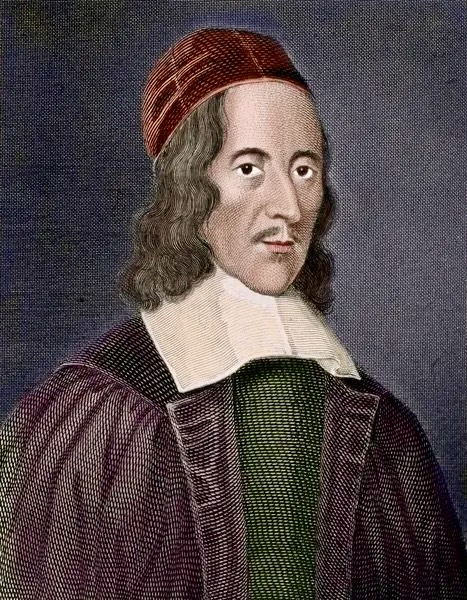
Son of a noble family moving in royal circles, George Herbert (1593-1633) was educated at Westminster School and Trinity College, Cambridge, where he became a Fellow in 1616. However when he was there, according to Isaak Walton, he was ‘apt to a consumption, and to fevers, and other infirmities.’[1] Although his university career was successful in that he was appointed Reader of Rhetoric (1620) and Public Orator (1619-27), a discontented George Herbert was more attracted to city life. Fluent in Italian, French and Spanish, Herbert was also a musician and song writer who went on to enjoy favour in the Court of King James I (1566-1625). After a brief period in Parliament (1624), his distinguished patrons disappointed him, and King James died. He then took a jaundiced view of his earlier career choices: ‘At first thou gav’st me milk and sweetness / I had my wish and way: / My days were strawed with flowers and happiness; / There was no month but May. / But with my years sorrow did twist and grow, / And made a party unawares for woe…. / I was entangled in the world of strife, / Before I had the power to change my life.’ .[2] He pursued ordination first as a deacon but after being ordained priest in 1630, he became Rector of Bemerton, in the Diocese of Salisbury. Dogged by ongoing ill health, he died and was buried there in 1633.
George Herbert is remembered not for his distinguished family background and his undoubted academic achievements, nor his forays into London’s high society. He became foremost a godly parish clergyman who was not associated with either of the two conflicting church parties of his day. In his poem, The British Church (see below under Section 9: ‘The Church: Provisional but Necessary’), he dissociated himself both from the ‘outlandish’ practice of some who were later described as ‘high’ churchmen, and also from the bare Puritan worship of those who abandoned ecclesiastical dress and the Church’s liturgy. He was a moderate Calvinist in his theology, with a deeply perceptive spirituality, expressed in beautiful seventeenth century poetry.
The headlines of the twelve sections below relate to the twelve Christian ‘Faith Markers’ in my earlier paper on the platform, www.oxford.academia.edu/Ian Bunting, but are in no way intended to colonise the poet.
[1] Cited in George Herbert: selected by W.H. Auden, Harmondsworth, Penguin Books, 1973, p. 8.
[2] ‘Affliction (I)’, The Poems of George Herbert, From the text of F.E. Hutchinson, London, Oxford University Press,1961, p. 39-40.
- Our Father: Hallowed on Earth as in Heaven
Mattens
I cannot open mine eyes,
But thou art ready there to catch
My morning-soul and sacrifice:
Then we must needs for that day make a match….
Indeed man’s whole estate
Amounts (and richly) to serve thee:
He did not heaven and earth create,
Yet studies them, not him by whom they be.
Teach me thy love to know;
That this new light, which now I see,
May both the work and workman show:
Then by a sunbeam I will climb to thee.
Providence.
Bees work for man; and yet they never bruise
Their master’s flower, but leave it, having done,
As fair as ever, and as fit to use;
So both the flower doth stay, and honey run….
O sacred Providence, who from end to end
Strongly and sweetly movest, shall I write,
And not of thee, through whom my fingers bend
To hold my quill? Shall they not do thee right?
Of all the creatures both in sea and land
Only to man hast thou made known thy ways,
And put the pen alone into his hand,
And made him secretary of thy praise.
Beasts fain would sing; birds dittie to their notes;
Trees would be tuning on their native lute
To thy renown; but all their hands and throats
Are brought to man, while they are lame and mute.
Man is the world’s high priest: he doth present
The sacrifice of all….
The Pulley
When God at first made man,
Having a glass of blessings standing by,
Let us, said he, pour on him all we can;
Let the world’s riches, which dispersed lie,
Contract into a span.
So strength first made a way,
Then beauty flowed, then wisdom, honour, pleasure.
When almost all was out, God made a stay,
Perceiving that alone of all his treasure
Rest on the bottom lay.
For if I should, said he,
Bestow this jewel also on my creature,
He would adore my gifts instead of me,
And rest in nature, not the God of nature;
So both should be losers.
Yet let him keep the rest,
But keep them with repining restlessness.
Let him be rich and weary, that at least,
If goodness lead him not, yet weariness
May toss him to my breast.
The Elixir
Teach me, my God and King,
In all things thee to see,
And what I do in any thing,
To do it as for thee:
Not rudely, as a beast,
To run into an action;
But still to make thee prepossessed,
And give it his perfection.
A man that looks on glass,
On it may stay his eye;
Or if he pleaseth, through it pass,
And then the heaven espie.
All may of thee partake:
Nothing can be so mean,
Which with this tincture (for thy sake)
Will not grow bright and clean
A servant with this clause
Makes drudgery divine:
Who sweeps a room, as for thy laws,
Makes that and the action fine.
This is the famous stone
That turneth all to gold:
For that which God doth touch and own
Cannot for less be told.
2. The Bible: Bestowed Word of God
A Priest to the Temple; Or, The Country Parson, His Character and Rule of Holy Life, 1632. (Benediction Classics, 2009)
‘The chief and top of his knowledge consists in the book of books, the storehouse and magazine of life and comfort, the Holy Scriptures. There he sucks and lives. In the Scriptures he finds four things; precepts for life, doctrines for knowledge, examples for illustration, and promises for comfort; these he hath digested severally’.
The Holy Scriptures (I)
Oh Book! Infinite sweetness! Let my heart
Suck every letter, and a honey gain,
Precious for any grief in any part;
To clear the breast, to mollify all pain.
Thou art all health, health thriving till it make
A full eternity: thou art a mass
Of strange delights, where we may wish and take.
Ladies, look here; this is the thankful glass,
That mends the looker’s eyes: this is the well
That washes what it shows. Who can endear
Thy praise too much? Thou art heaven’s Ledger here,
Working against the states of death and hell.
Thou art joy’s handsell: heaven lies flat in thee,
Subject to every mounter’s bended knee.
The Holy Scriptures II.
Oh that I knew how all thy lights combine,
And the configurations of their glory!
Seeing not only how each verse doth shine,
But all the constellations of the story….
Such are thy secrets, which my life makes good,
And comments on thee: for in every thing
Thy words do find me out, and parallels bring,
And in another make me understood.
Stars are poor books, and oftentimes do miss:
This book of stars lights to eternal bliss.
3. Jesus Christ: Crucified God in Person
Ungratefulness
Lord, with what bounty and rare clemency
Hast thou redeemed us from the grave!
If thou hadst let us run,
Gladly had man adored the sun
And thought his god most brave;
Where now we shall be better gods than he.
Thou hast but two cabinets full of treasure,
The Trinity, and Incarnation:
Thou hast unlocked them both,
And made them jewels to betroth
The work of thy creation
Unto thy self in everlasting pleasure.
The statelier cabinet is the Trinity,
Whose sparkling light access denies:
Therefore thou dost not show
This fully to us, till death doth blow
The dust into our eyes:
For by that powder thou wilt make us see.
But all thy sweets are packed up in the other;
Thy mercies thither flock and flow:
That as the first affrights,
This may allure us with delights;
Because this box we know;
For we have all of us just such another.
But man is close, reserved, and dark to thee:
When thou demandest but a heart,
He cavils instantly.
In his poor cabinet of bone
Sins have their box apart,
Defrauding thee, who gavest two for one.
Prayer II.
Of what unmeasurable love
Art thou possessed, who, when thou could’st not die,
Were fain to take our flesh and curse,
And for our sakes sin person sin reprove,
That by destroying that which tied thy purse,
Thou mightiest make way for liberality!
The Agonie
Who knows not love, let him assay
And taste that juice, which on the cross a pike
Did set again abroach; then let him say
If ever did he taste the like.
Love is that liquor sweet and most divine
Which my God feels as blood; but I, as wine.
4. Humankind: Sinful, Rebellious and Faithless
Man
My God, I heard this day,
That none doth build a stately habitation,
But he that means to dwell therein.
What house more stately hath there been,
Or can be, than is Man? To whose creation
All things are in decay.
For man is ev’ry thing,
And more….
Since then, my God, thou hast
So brave a Palace built; O dwell in it,
That it may dwell with thee at last!
Till then, afford us so much wit;
That, as the world serves us, we may serve thee,
And both thy servants be.
Sin (I)
Lord, with what care hast thou begirt us round!
Parents first season us: then schoolmasters
Deliver us to laws; they send us bound
To rules of reason, holy messengers,
Pulpits and Sundays, sorrow dogging sin,
Afflictions sorted, anguish of all sizes,
Fine nets and stratagems to catch us in,
Bibles laid open, millions of surprises,
Blessings beforehand, ties of gratefulness,
The sound of glory ringing in our ears:
Without, our shame; within our consciences;
Angels and grace, eternal hopes and fears.
Yet all these fences and their whole array
One cunning bosom-sin blows quite away.
Business
Canst be idle? Canst thou play,
Foolish soul who sinned today?
Hast thou tears, or hast thou none?
If poor soul, thou hast no tears,
Would thou hadst no faults or fears!
Who in heart not ever kneels,
Neither sin nor Saviour feels.
Sinnes round
Sorry I am, my God, sorry I am,
That my offences course it in a ring.
My thoughts are working like a busy flame,
Until their cockatrice they hatch and bring:
And when they once have perfected their drafts,
My words take fire from my inflamed thoughts….
But words suffice not, where are lewd intentions:
My hands do join to finish the inventions:
And so my sins ascend three stories high,
As Babel grew, before there were dissensions.
Yet ill deeds loiter not: for they supply
New thoughts of sinning: wherefore, to my shame,
Sorry I am, my God, sorry I am.
The Pearl
I know the ways of Pleasure, the sweet strains,
The lullings and the relishes of it;
The propositions of hot blood and brains;
What mirth and music mean; what love and wit
Have done these twenty hundred years, and more:
I know the projects of unbridles store….
Bitter-sweet
Ah my dear angry Lord,
Since thou dost love, yet strike;
Cast down, yet help afford;
Sure I will do the like.
I will complain, yet praise;
I will bewail, approve;
And all my sour sweet days
I will lament, and love.
- The Grace of God: Justifying and Converting
Redemption.
Having been tenant long to a rich Lord,
Not thriving, I resolved to be bold,
And make a suit unto him, to afford
A new small-rented lease, and cancel the old.
In heaven at his manor I him sought:
They told me there, that he was lately gone
About some land, which he had dearly bought
Long since on earth, to take possession.
I straight returned, and knowing his great birth,
Sought him accordingly in great resorts;
In cities, theatres, gardens and parks, and courts:
At length I heard a ragged sound and mirth
Of thieves and murderers: there I him espied,
Who straight, ‘Your suit is granted,’ said, and died.
Love (III)
Love bade me welcome: yet my soul drew back,
Guilty of dust and sin,
But quick-eyed Love, observing me grow slack
From my first entrance in,
Drew nearer to me, sweetly questioning,
If I lacked anything.
A guest, I answered, worthy to be here:
Love said, You shall be he.
I the unkind, ungrateful? Ah my dear,
I cannot look on thee.
Love took my hand, and smiling did reply,
Who made the eyes but I?
Truth Lord, But I have marred them: let my shame
Go where it doth deserve.
And know you not, says Love, who bore the blame?
My dear, then I will serve.
You must sit down, says Love, and taste my meat;
So I did sit and eat.
The Flower
How fresh, O Lord, how sweet and clean
Are thy returns! ev’n as the flowers of spring;
To which, beside their own demean,
The late-past frosts tributes of pleasure bring.
Grief melts away
Like snow in May,
As if there were no such thing.
Who would have thought my shrivelled heart
Could have recovered greenness? It was gone
Quite underground; as flowers depart
To see their mother root, when they have blown;
Where they together
All the hard weather,
Dead to the world, keep house unknown.
These are thy wonders, Lord of power,
Killing and quicke`ning, bringing down to hell
And up to heaven in an hour;
Making a chiming of a passing-bell.
We say amiss,
This or that is:
Thy word is all, if we could spell….
And now in age I bud again,
After so many deaths I live and write:
I once more smell the dew and rain,
And relish versing: O my only light,
It cannot be
That I am he
On whom thy tempests fell all night….
Gratefulness
Thou hast given so much to me,
Give one thing more, a grateful heart.
See how thy beggar works on thee
By art.
Wherefore I cry, and cry again;
And in no quiet canst thou be,
Till I a thankful heart obtain
Of thee:
Not thankful when it pleaseth me;
As if thy blessings had spare days:
But such a heart whose pulse may be
Thy praise.
- Christ-likeness: Progressive Christian Living
Love (III)
Love bade me welcome; yet my soul drew back,
Guilty of dust and sin.
But quick-eyed Love, observing me grow slack
From my first entrance in,
Drew nearer to me, sweetly questioning,
If I lacked anything.
A guest, I answered, worthy to be here.
Love said, You shall be he.
I, the unkind, ungrateful? Ah, my dear,
I cannot look on thee.
Love took my hand, and smiling did reply,
Who made the eyes but I?
Truth, Lord, but I have marred them; let my shame
Go where it doth deserve.
And know you not, says Love, who bore the blame?
My dear then I will serve.
You must sit down, says Love, and taste my meat.
So I did sit and eat.
Affliction (I)
When first thou didst entice to thee my heart,
I thought the service brave:
So many joys I writ down for my part,
Besides what I might have
Out of my stock of natural delights,
Augmented with thy gracious benefits….
Now I am here, what thou wilt do with me
None of my books will show:
I read, and sigh, and wish I were a tree;
For sure then I should grow
To fruit or shade: at least some bird would trust
Her household to me, and I should be just.
Yet, though thou troublest me, I must be meek;
In weakness must be stout.
Well, I will change the service, and go seek
Some other master out.
Ah my dear God! Though I am clean forgot,
Let me love thee, if I love thee not.
A Wreath
A wreathed garland of deserved praise,
Of praise, deserved unto thee I give,
I give to thee, who knowest all my ways,
My crooked winding ways, wherein I live,
Wherein I die, not live; for life is straight,
Straight as a line, and ever tends to thee,
To thee, who art more far above deceit,
Than deceit seems above simplicity.
Give me simplicity, that I may live,
So live and like, that I may know thy ways,
Know them and practise them; then shall I give
For this poor wreath, give thee a crown of praise.
- Holy Spirit: in Christian Experience
The Windows
Lord, how can man preach thy eternal word?
He is a brittle crazy glass:
Yet in the temple thou dost him afford
This glorious and transcendent place,
To be a window, through thy grace.
But when thou dost anneal in glass thy story,
Making thy life to shine within
The holy preachers; then the light and glory
More reverend grows, & more doth sin:
Which else shows waterish, bleak & thin.
Doctrine and life, colours and light, in one
When they combine and mingle, bring
A strong regard and aw: but speech alone
Doth vanish like a flaring thing,
And in the ear, not conscience ring.
Whitsunday
Listen sweet Dove unto my song,
And spread thy golden wings in me;
Hatching my tender heart so long
Till it get wing, and fly away with thee
Where is that fire which once descended
On the Apostles? Thou didst then
Keep open house, richly attended,
Feasting all comers by twelve chosen men…
But since those pipes of gold, which brought
The cordial water to our ground,
Were cut and martyred by the fault
Of those, who did through their side wound,
Thou shutt’st the door, and keep’st within;
Scarce a good joy creeps through the chink:
And if the braves of conquering sin
Did not excite thee, we should wholly sink.
Lord, though we change, thou art the same;
The same sweet God of love and light:
Restore this day, for thy great name,
Unto his ancient and miraculous right.
- Believers: Assured, Called and Prayerful
King of Glory, King of Peace,
I will love thee:
And that love may never cease,
I will move thee.
Thou hast granted my request,
Thou hast heard me:
Thou didst not my working breast,
Thou hast spared me.
Wherefore with my utmost art
I will sing thee,
And the cream of all my heart
I will bring thee.
Though my sins against me cried,
Thou didst clear me;
And alone, when they replied,
Thou didst hear me.
Seven whole days, not one in seven,
I will praise thee,
In my heart, though not in heaven,
I can raise thee.
Thou grew’st soft and moist with tears,
Thou relentedst:
And when Justice called for fears,
Thou dissentedst.
Small it is, in this poor sort
To enrol thee:
E’en eternity’s too short
To extoll thee.
The Call.
Come, my Way, my Truth, my Life:
Such a Way, as gives us breath:
Such a truth, as ends all strife:
Such a Life as killeth death.
Come, my Light, my Feast, my Strength:
Such a Light, as shows a feast:
Such a Feast, as mends in length:
Such a Strength, as makes his guest.
Come, my Joy, my Love, my Heart:
Such a Joy, as none can move:
Such a Love, as none can part:
Such a Heart, joys in love.
Prayer (1)
Prayer the Church’s banquet, Angels age,
God’s breath in man returning to his birth,
The soul in paraphrase, heart in pilgrimage,
The Christian plummet sounding heaven and earth;
Engine against the almighty, sinners’ tower,
Reversed thunder, Christ-side-piercing spear,
The six-days world transposing in an hour,
A kind of tune, which all things hear and fear;
Softness, and peace, and joy, and love, and bliss,
Exalted Manna, gladness of the best,
Heaven in ordinary, man well dressed,
The milky way, the bird of Paradise,
Church bells beyond the stars heard, the soul’s blood,
The land of spices; something understood.
- The Church: Provisional but Necessary
The British Church
A fine aspect in fit array,
Neither too mean, nor yet too gay,
Shows who is best.
Outlandish looks may not compare:
For all they either painted are,
Or else undressed.
She on the hills, which wantonly
Allureth all in hope to be
By her preferred
Hath kissed so long her painted shrines,
The e’en her face by kissing shines,
For her reward.
She in the valley is so shy
Of dressing, that her hair doth lie
About her ears:
While she avoids her neighbours pride,
She wholly goes on th’other side,
And nothing wears.
The Temple
O gracious Lord, how shall I know
Whether in these gifts thou be so
As thou art every-where;
Or rather so, as thou alone
Tak’st all the lodging, leaving none
For thy poor creature there?
First I am sure, whether bread stay
Or whether bread do fly away
Concerneth bread, not me.
But that thou and all thy train
Be there, to thy truth and my gain,
Concerneth me and thee.
The Church Porch
Though private prayer be a brave design,
Yet public hath more promises, more love:
And love’s a weight to hearts, to eyes a sign.
We all are but cold suitors; let us move
Where it is warmest. Leave thy six and seven;
Pray with the most: for where most pray, is heaven.
When once thy foot enters the church, be bare.
God is more there, than thou: for thou art there
Only his permission. Then beware,
And make thyself all reverence and fear.
Kneeling ne’er spoiled silk stocking: quit thy state,
All equal are within the churches gate.
Resort to sermons, but prayers the most:
Praying’s the end of preaching….
In time of service seal up both thine eyes,
And send them to thine heart; that spying sin,
They may weep out the stains by them did rise:
Those doors being shut, all by the ear comes in.
Who marks in church-time other symmetry,
Makes all their beauty his deformity.
Let vain or busy thoughts have there no part:
Bring not thy plough, thy plots thy pleasures thither.
Christ purged his temple; so must thou thy heart.
All worldly thoughts are but thieves met together
To cozen thee.[4] Look to thy actions well:
For churches are either our heaven or hell.
Judge not the preacher; for he is thy Judge
If thou mislike him, thou conceivs’t him not.
God calleth preaching folly. Do not grudge
To pick out treasures from an earthen pot.
The worst speak something good: if all want sense,
God takes a text, and preacheth patience.
He that gets patience, and the blessing which
Preachers conclude with, has not lost his pains.
He that by being at church escapes the ditch,
Which he might fall in by companions, gains.
He that loves God’s abode, and to combine
With saints on earth, shall one day with them shine.
Jest not at preachers’ language, or expression:
How know’st thou, but thy sins made him miscarry?
Then turn thy faults and his into confession:
God sent him, whatsoe’re he be: O tarry,
And love him for his Master: his condition,
Though it be ill, makes him no ill Physician.
A true hymn
…The fineness which a hymn or psalm affords,
Is, when the soul unto the lines accords.
He who craves all the mind,
And all the soul, and strength, and time,
If the words only rhyme,
Justly complains, that somewhat is behind
To make his verse, or write a hymn in kind.
Whereas if the heart be moved,
Although the verse be somewhat scant,
God doth supply the want.
As when the heart says (sighing to be approved)
O, could I love! And stops: God writeth, Loved!
The Holy Communion
O gracious Lord, how shall I know
Whether in these gifts thou be so
As thou art everywhere;
Or rather so, as thou alone
Tak’st all the lodging, leaving none
For thy poor creature there?
First I am sure, whether bread stay
Or whether Bread do fly away
Concerneth bread, not me.
That both thou and all thy train
Be there, to thy truth, and my gain,
Concerneth me and Thee….
This gift of all gifts is the best,
Thy flesh the least that I request.
Thou took’st that pledge for me:
Give me not that I had before,
Or give me that, so I have more;
My God, give me all Thee.
Peace
There was a Prince of old
At Salem dwelt, who lived with good increase
Of flock and fold.
He sweetly liv’d: yet sweetness did not save
His life from foes.
But after his death out of his grave
There sprang twelve storks of wheat:
Which many wond’ring at, got some of those
To plant and set.
It prospered strangely, and did soon disperse
Through all the earth:
For they that do taste it do rehearse,
That virtue lies therein,
A secret virtue bringing peace and mirth
By flight of sin.
Take of this grain, which in my garden grows,
And grows for you;
Make bread of it: and that repose
And peace, which every where
With so much earnestness you do pursue,
Is only there.
Aaron
Holiness on the head,
Light and perfections on the breast,
Harmonious bells below, raising the dead
To lead them into life and rest:
Thus are true Aarons drest.
Profaneness in my head,
Defects and darknesse in my breast,
A noise of passions ringing me for dead
Unto a place where is no rest:
Poore priest thus am I drest.
Only another head,
I have, another heart and breast,
Another musick, making live not dead,
Without whom I could have no rest:
In him I am well drest.
Christ is my only head,
My alone only heart and breast,
My only musick, striking me even dead;
That to the old man I may rest,
And be in him new drest.
So holy in my head,
Perfect and light in my deare breast,
My doctrine tuned by Christ, who is not dead,
But lives in me while I do rest,
Come people; Aaron’s drest.
- The Mission of God
Praise (III)
Lord, I will mean and speak thy praise,
Thy praise alone.
My busy heart shall spin it all my days:
And when it stops for want of store
Then will I wring it with a sigh or groan,
That thou may’st yet have more.
When thou dost favour any action,
It runs, it flies:
All things concur to give it a perfection.
That which had but two legs before,
When thou dost bless, hath twelve: one wheel doth rise
To twenty then, or more….
Wherefore I sing. Yet since my heart,
Though pressed, runs thin;
O that I might some other hearts convert,
And so take up at use good store:
That to thy chest there might be coming in
Both all my praise, and more!
- A Vision of God’s Kingdom
Antiphon (I)
Let all the world in every corner sing,
My God and King !
The heavens are not too high,
His praise may thither fly:
The earth is not too low,
His praises there may grow.
Let all the world in every corner sing,
My God and King !
The church with psalms must shout,
No door can keep them out ;
But above all the heart
Must bear the longest part.
Let all the world in every corner sing,
My God and King !
The Church Militant
Religion stands on tiptoe in our land,
Ready to pass to the American strand.
When height of malice, and prodigious lust,
Impudent sinning, witchcrafts, and distrusts
(The marks of future bane) shall fill our cup
Unto the brimme, and make our measure up….
Then shall Religion to America flee:
They have their times of gospel, ev’n as we.
My God, thou dost prepare for them a way
By carrying first their gold from them away:
For gold and grace did never yet agree:
Religion always sides with poverty.
- Glory: Now and Then, Here and There
The Discharge
Thy life is Gods, thy time to come is gone,
And is his right.
He is thy night at noon: he is at night
Thy noon alone.
The crop is his, for he has sown.
And well it was for thee, when this befell,
That God did make
Thy business his, and in thy life partake:
For thou canst tell,
If it be his once, all is well.
Only the present is thy part and fee.
And happy thou,
If, though thou didst not beat thy future brow,
Thou could’st well see
What present things required of thee.
They ask enough; why should’st thou further go?
Raise not the mud
Of future depths, but drink the clear and good.
Dig not for woe
In times to come; for it will grow.
Man and the present fit: if he provide,
He breaks the square.
This hour is mine: if for the next I care,
I grow too wide,
And encroach upon deaths side.
Man’s Medley
Hark, how the birds do sing,
And woods ring.
All creatures have their joy; and man hath his,
Yet if we rightly measure,
Man’s joy and pleasure
Rather hereafter, than in present, is….
Not that he may not here
Taste of the cheer,
But as birds drink, and straight lift up their head,
So he must sip and think
Of better drink
He may attain to, after he is dead.
But as his joys are double;
So is his trouble.
He hath two winters, other things but one
Both frost and thoughts do nip,
And bite his lip;
And he of all things fears two deaths alone.
Yet even the greatest griefs
May be reliefs,
Could he but take them right, and in their ways.
Happy is he, whose heart
Hath found the art
To turn his double pains to double praise.
Heaven
O who will show me those delights on high
Echo; I
Thou echo, thou art mortal, all men know.
Echo. No
Wert thou not born among the trees and leaves?
Echo. Leaves.
And are there any leaves that still abide?
Echo. Bide.
What leaves are they? Impart the matter wholly.
Echo. Holy.
Are holy leaves the echo then of bliss?
Echo. Yes
Then tell me, What is that supreme delight?
Echo. Light.
Light to the mind: What shall the will enjoy?
Echo. Joy.
But are there cares and business with the pleasure?
Echo. Leisure.
Light, joy, and leisure: But shall they persevere?
Echo. Ever.
12.03.2016

https://shorturl.fm/lvF6b